
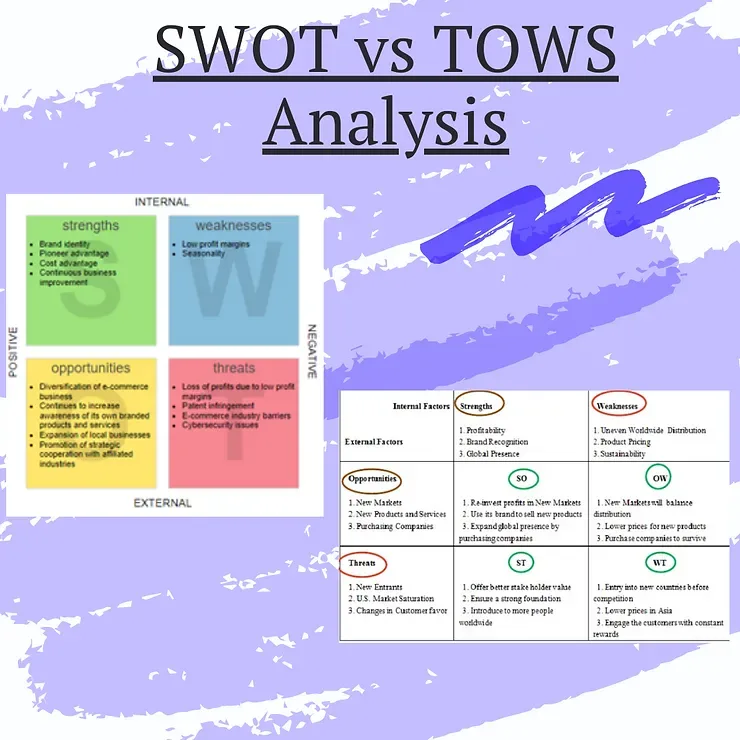
What a SWOT Analysis Is
The SWOT analysis has been around for decades and is typically used for a quick analysis of a business or organization. SWOT is an acronym for (S)trengths, (W)eaknesses, (O)pportunities, and (T)hreats. To do this, partition a square into four quadrants and label each one separately with Strengths and Weaknesses across the X-axis and Opportunities and Threats across the Y-axis. Add relevant information about your company into each box to get a quick snapshot of the current status of the organization. Refer to Image 1 for an example of what a SWOT analysis would look like when complete.
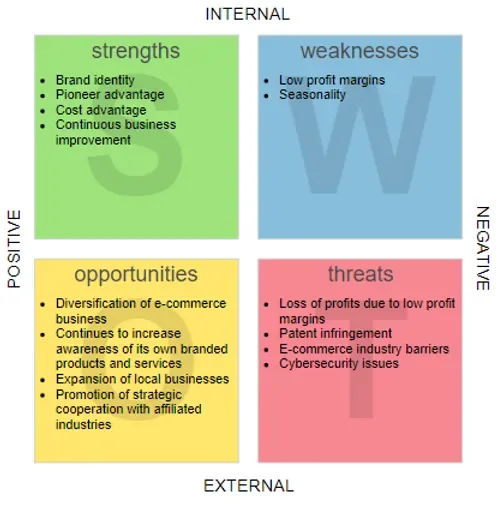
Figure 1: SWOT Example, by Warren Lynch, 2020, Digital Image
How TOWS Turns SWOT into Strategy
The TOWS has the same acronyms but is simply written backward. It differs from the SWOT as it takes the analysis of the organization and it makes actionable tasks out of them by converging attributes from both the x and y-axes. The four new squares will be labeled SO (Strengths & Opportunities), ST (Strengths & Threats), WO (Weaknesses & Opportunities), and WT (Weaknesses & Threats). An example would be weaving together something from the weakness and opportunities squares to come up with a remedy that will make the business stronger. Please refer to Image 2 for an example of what a TOWS analysis would look like when completed.
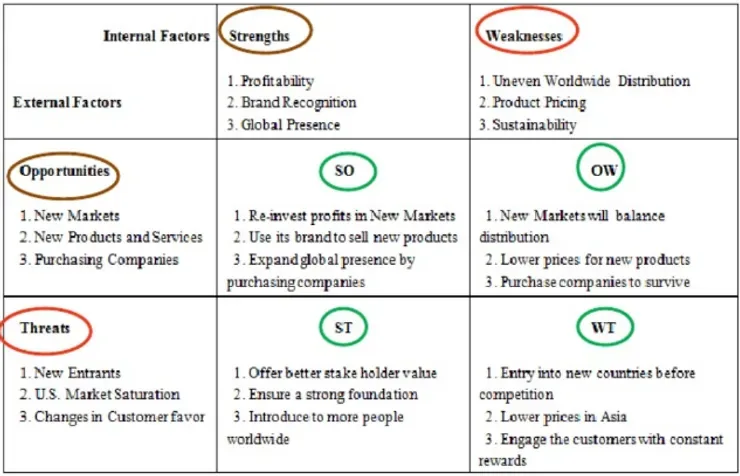
Figure 2: TOWS Example, by Warren Lynch, 2020, Digital Image
SWOT vs TOWS at a Glance
| SWOT | TOWS | |
|---|---|---|
| Purpose | Snapshot of where the business stands | Turns that snapshot into strategies |
| Output | Four lists: strengths, weaknesses, opportunities, threats | Four strategy sets: SO, ST, WO, WT |
| How it works | Lists internal and external factors separately | Pairs internal factors with external ones |
| Question it answers | Where are we now? | What should we do about it? |
| When to use it | Start of planning, audits, quick reviews | Right after a SWOT, when choosing next moves |
A Quick Example
Say you run a small neighborhood coffee shop. This is a made-up example, but it shows how the two tools work together.
The SWOT
Strengths: loyal regulars and great reviews. Weaknesses: a tiny marketing budget and no online ordering. Opportunities: a new office building opening down the street. Threats: a big chain opening a location nearby.
The TOWS
Now you mix the boxes to come up with actions.
SO (Strengths and Opportunities): use those great reviews in ads aimed at the new office workers.
ST (Strengths and Threats): start a loyalty program so regulars have a reason to stay when the chain opens.
WO (Weaknesses and Opportunities): add simple online ordering so office workers can grab coffee on a tight lunch break.
WT (Weaknesses and Threats): on a small budget, don’t try to outspend the chain. Focus on what it can’t copy, like the personal service.
See the difference? The SWOT tells you where you stand. The TOWS gives you a to-do list.
Tips for Doing Your Own
Be honest in the weaknesses box. It’s tempting to go easy on yourself, but the weaknesses are where a lot of the best actions come from. Keep each point short and specific, because “bad marketing” is too vague to act on while “no online ordering” isn’t. Revisit the analysis every so often, since opportunities and threats change as the market does. And once you have your TOWS actions, rank them so you know which to tackle first. If you like frameworks like this, I also wrote about using the AIDA model in marketing, which is handy once you get to the ad and messaging side.
Which One to Use
The SWOT analysis is great a great snapshot of an organization; however, the TOWS takes the analysis one step farther to extract key actionable insights from the analysis to better improve the organization’s functions and mitigate potential damage.
Thank you for taking the time to follow me on this journey, if you have any questions or comments, please share them in the comments section as I would love to hear you!
Frequently Asked Questions
What is the difference between SWOT and TOWS?
SWOT lists a business’s strengths, weaknesses, opportunities and threats. TOWS uses the same four factors but pairs them up (SO, ST, WO, WT) to turn the list into strategies.
Should I do a SWOT or a TOWS first?
Do the SWOT first. A TOWS matrix is built from a finished SWOT, so it needs that list to work from.
What do SO, ST, WO and WT mean in a TOWS matrix?
SO uses strengths to take advantage of opportunities. ST uses strengths to counter threats. WO uses opportunities to fix weaknesses. WT works on reducing weaknesses so threats do less damage.
Is TOWS just SWOT written backward?
The letters are the same, written backward, but TOWS goes a step further. Instead of only listing factors, it combines them into actions.
References
Lynch, W 2020, SWOT Example, digital image, Medium, viewed March 11, 2021,
<https://warren2lynch.medium.com/from-swot-to-tows-analysis- 55ac394064b7#:~:text=SWOT%20matrix%20is%20a%20planning,and%20Threats%20in%20point%20form.&text=Whereas%2C%20TOWS%20matrix%20identifies%20the,selecting%20strategies%20on%20their%20bases>.
Lynch, W 2020, TOWS Example, digital image, Medium, viewed March 11, 2021,
<https://warren2lynch.medium.com/from-swot-to-tows-analysis-55ac394064b7#:~:text=SWOT%20matrix%20is%20a%20planning,and%20Threats%20in%20point%20form.&text=Whereas%2C%20TOWS%20matrix%20identifies%20the,selecting%20strategies%20on%20their%20bases>.